
Founders spend absurd amounts of time on decks. I understand why. The deck is visible. It feels like work. It can be edited at midnight. It gives the comforting illusion that the fundraise is moving because slide 7 is now sharper and the market slide finally looks less ridiculous than it did yesterday.
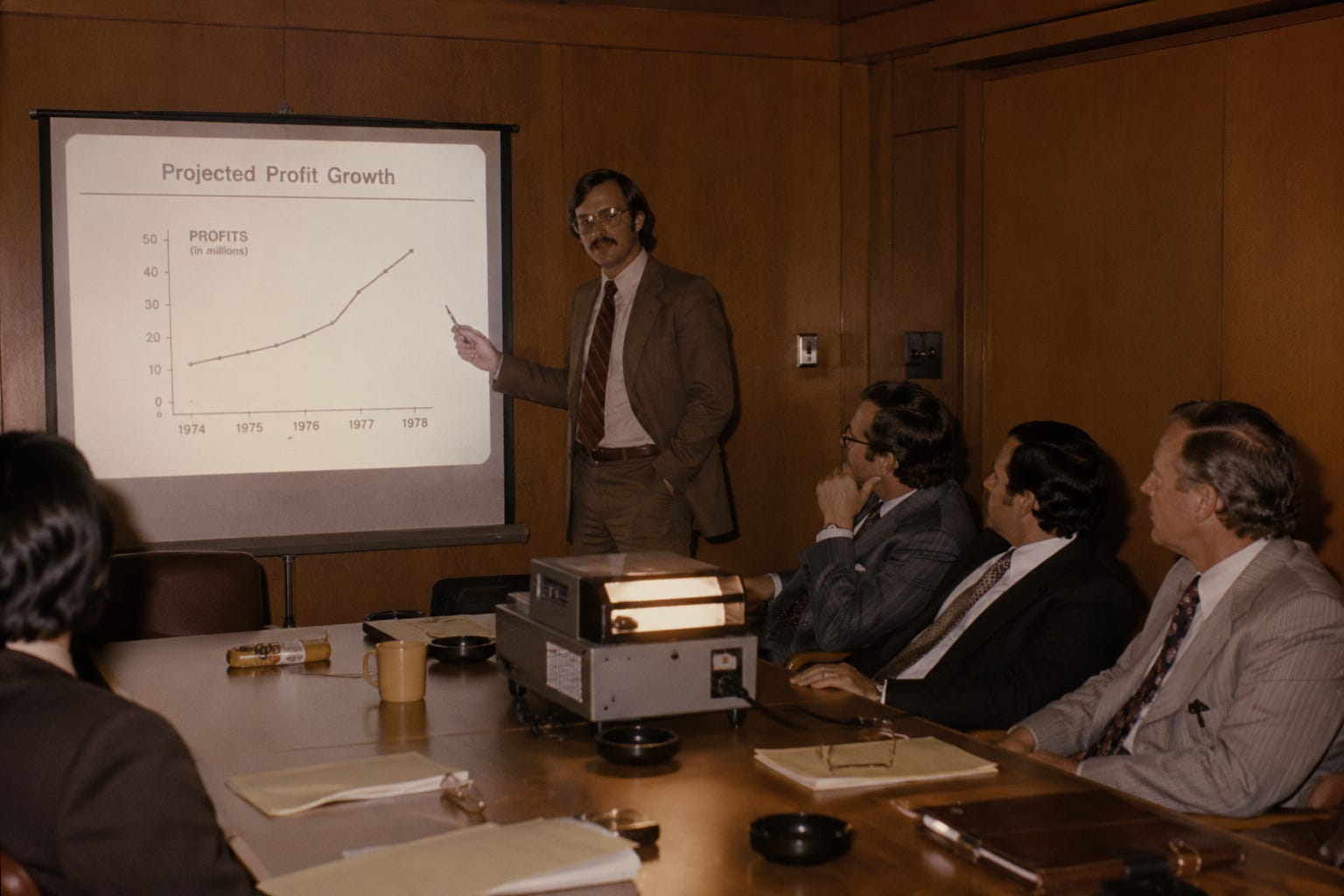
I have spent enough time inside funds, partner discussions, accelerator selection rooms, and founder prep sessions to know how seductive that illusion is. Founders focus on the deck because it is the part they can control and the part they can see. But the deck is not usually the thing that matters most after the meeting. The thing that matters is the internal case written about the company once the founder leaves the room.
That is why I keep coming back to the same blunt point: the deck is not the product. The memo is.
The uncomfortable truth is that most founders do not really understand what that memo is, how it works, or how much of the investment decision gets shaped inside it. The founders who do understand it tend to be the ones who have already been through the machine before. Second-time founders. Exit founders. Founders who have sat across enough investors to stop confusing the visible ritual with the real decision process.
I do not mean every firm literally uses the same investment committee template. Some funds are bureaucratic. Some are loose. Some run on consensus. Some run on one strong partner and a quiet room. But almost all serious capital ends up at the same operating need. Someone inside the firm has to translate your company into something other people can evaluate, debate, remember, and approve. The minute that happens, the fundraise stops being only a presentation problem and becomes an internal decision problem.
First Round has written unusually openly about how partner meetings work. Their description matters precisely because it is not exotic. Partner meetings often run about an hour, involve 5 to 15 investors, and the point partner typically writes an investment memo ahead of time for the rest of the partnership to read. After the founder leaves, there is often a same-day debrief and some version of a quick decision. That should change how founders think about the deck. If the memo already exists before you enter the room, then the meeting is not the whole product. It is just one layer of the case.
USV describes the same reality from another angle. In its public guide, it says about 20 people may be in the room and that the team does not vote so much as discuss the company together until a decision emerges. The structure is different, but the implication is identical. Your company has to remain coherent when the person summarizing it is not the founder, does not have all the context, and is not in love with the thing.
That is the part most founders underprepare for. They rehearse the pitch. They do not prepare for the internal write-up.
A deck is optimized for the meeting. A memo is optimized for internal scrutiny. Once you see that distinction clearly, a lot of fundraising confusion starts to disappear. A deck can hide ambiguity because the founder is in the room narrating over it. A deck can smooth over a weak leap because energy is high and nobody wants to kill the flow too early. A good founder can make a company feel larger, cleaner, and more inevitable for forty-five minutes than it looks on paper. I have seen that happen many times. Then I have watched the exact same company become smaller, messier, and less convincing the moment somebody has to write down the actual case.
That is not a minor difference in format. It is a different standard of truth.
The memo forces decisions that the deck can postpone. What is the actual market, not the aspirational one? What has really been proven by data rather than founder confidence? What still requires a leap of faith? How large is that leap, exactly? What are the principal objections? What would make a skeptical partner uncomfortable? How does the company fit the portfolio, the reserves model, the ownership target, and the return profile the firm needs?
In a live meeting, those questions can stay fluid for a while. In a memo, they harden. I have always trusted written material more than founders expect for exactly that reason. Once the case is written down, the romance drops and the underwriting starts.
This is also why I think founders overvalue pitch performance and undervalue memo-ability. Memo-able does not mean eloquent. It means the point partner can explain what the company is, why it matters, what has been proven, what still requires belief, why that belief is reasonable, and why the upside is large enough to justify the firm’s time and reputation. If that cannot be stated in plain internal language, you do not have a slide-order problem in any meaningful sense. You have an internal legibility problem.
You can see this most clearly in the small number of public memos that firms have published. Bessemer’s archive is valuable because it shows what internal investment writing looks like when it is doing real work. The old Toast memo does not read like founder theater. It starts with the proposed investment, the target ownership, and the return framing. Then it moves into the market logic. With a little over 1% penetration, Toast could plausibly become a $100 million revenue company. That is the case being reduced to its essential internal logic: here is what we are buying, here is how much of it we own, here is the return path, here is why the market is large enough, here is why the risk may be worth it.
The Shopify memo is even more instructive because it was not a conventional yes. At the time, many VCs did not believe software serving SMBs could produce venture-scale outcomes. So the real internal problem was not whether the founder could present well. The real internal problem was whether someone could write a case strong enough to overcome category skepticism. Organic growth, retention, app ecosystem dynamics, founder quality, and upmarket possibility all had to be converted into a thesis strong enough to survive people who did not naturally believe in the category.
That is what good venture writing does. It does not summarize the company. It turns uncertainty into an investable internal argument.
Once you understand that, a lot of mysterious founder experiences stop being mysterious. A pitch can go well and still die. The investor can like you and still pass. The meeting can feel warm and still produce nothing. I have seen founders confuse warmth with movement over and over again, and I have seen investors genuinely admire a founder while still failing to carry the deal internally. Those are not the same thing.
Often the hidden explanation is simple: the deck worked in person, but the written case did not survive internal discussion.
The company sounded compelling in the room. It became weaker on paper and in debate. That gap is where a lot of rounds quietly die.
This matters even more in the current market because the internal economics inside funds are getting tighter, not looser. NVCA’s 2026 Yearbook frames the environment around a continuing liquidity crisis. PitchBook/NVCA’s Q3 2025 Venture Monitor adds another revealing detail: the top 10 VC funds captured 42.9% of all capital, the highest share in at least a decade. Whether you are talking to a large platform or a smaller fund trying to stay disciplined, that kind of concentration changes behavior. People become more sensitive to time, reserves, portfolio construction, follow-on obligations, and the internal cost of carrying ambiguous deals.
Which means founders are not just competing for interest. They are competing for memo bandwidth.
That may sound abstract, but it is extremely practical. A partner who likes your company still has to write it up, defend it, answer objections, connect it to portfolio logic, and spend political capital on it inside the firm. If the case is muddy, if the leap of faith is too large, if the category explanation takes too much work, if the proof is scattered across anecdotes rather than concentrated into something underwriteable, then the cost of getting the deal through rises. And when that cost rises, the enthusiasm threshold rises with it.
This is where founders usually make the wrong adjustment. They add more material. More slides. More product screenshots. More feature pages. More market maps. More customer quotes. More reasons the investor should “get it.” That feels sophisticated. In most institutional settings, it is the opposite. The room does not need more material. It needs more compression.

I sometimes think the deck-versus-memo distinction is close to the difference between a live demo and a codebase. The live demo can be charming. The codebase has to survive other people opening it cold. It has to remain legible when nobody is there to narrate around the weird parts. It has to make sense under pressure. That is the memo.
And here is the uncomfortable part founders should probably hear earlier: many decks are beautifully produced wrappers around cases that nobody inside the fund wants to carry. Not because the company is bad. Because the case is expensive to explain.
That is why, if I am helping a founder prepare for a serious process, I care less than most people about whether the deck is prettier and much more about whether the internal case is already legible. I want to know what the point partner would actually write tonight if forced to decide. I want to know how they would describe the company in two sentences, what they would name as the core investment logic, what they would list as the principal risks, what they would say is proven, what still requires faith, and which line in the memo would make a skeptical partner lean forward instead of lean back.
That exercise is more valuable than another six hours of slide surgery.
It is also one of the reasons Ugly Baby exists. The hidden artifact in venture has always bothered me. Founders are judged by an internal document they rarely see, written in a language they often do not speak, by people who are reducing not just the deck but the whole company into a partner-readable form. Ugly Baby is basically a founder-side attempt to reverse-engineer that invisible artifact before the market writes it for you. Not a prettier deck. A sharper investor read. Likely objections. Memo logic. Proof gaps. Where the case breaks. What makes it easier to underwrite.
That is a much more serious job than “AI pitch deck feedback,” and it maps much more closely to how capital decisions are actually made.
NextView describes its internal memos as intentionally short, usually one to two pages, built not just to summarize but to sharpen conviction and timestamp it. A Stanford/Addepar research brief found that 97% of professional investors surveyed had a formal memo template and process, while 78% required memo approval before an investment could happen. Different asset classes are not the point. The point is that serious capital writes the case down.
Capital likes documents because writing exposes vagueness.
That is the part founders should remember. Not the fetish for process. Not the romance of the partner meeting. Not the fantasy that one perfect performance changes everything. What matters is whether the company can be turned into an internal investment argument that feels coherent, defensible, and worth backing.
That is the real product.
The real product is whether your champion can defend the case without becoming your full-time translator. The real product is whether the company can move from meeting to memo to debate to decision without losing its logic. The real product is whether the written case sounds stronger than the live presentation did.
If it does, the process starts to feel smooth, sometimes suspiciously smooth. If it does not, the process starts to feel political, confusing, and arbitrary. Sometimes it is political. Sometimes it is lazy. But often the simpler answer is that the product was not the deck, and the founder optimized the wrong artifact.