
Good morning.
The market is slowly accepting a boring truth: autonomy is not a magic trick. It is a staffing model with metal, software, procurement forms, exception handling, maintenance schedules, and one poor human who still has to explain why the thing stopped near aisle seven.
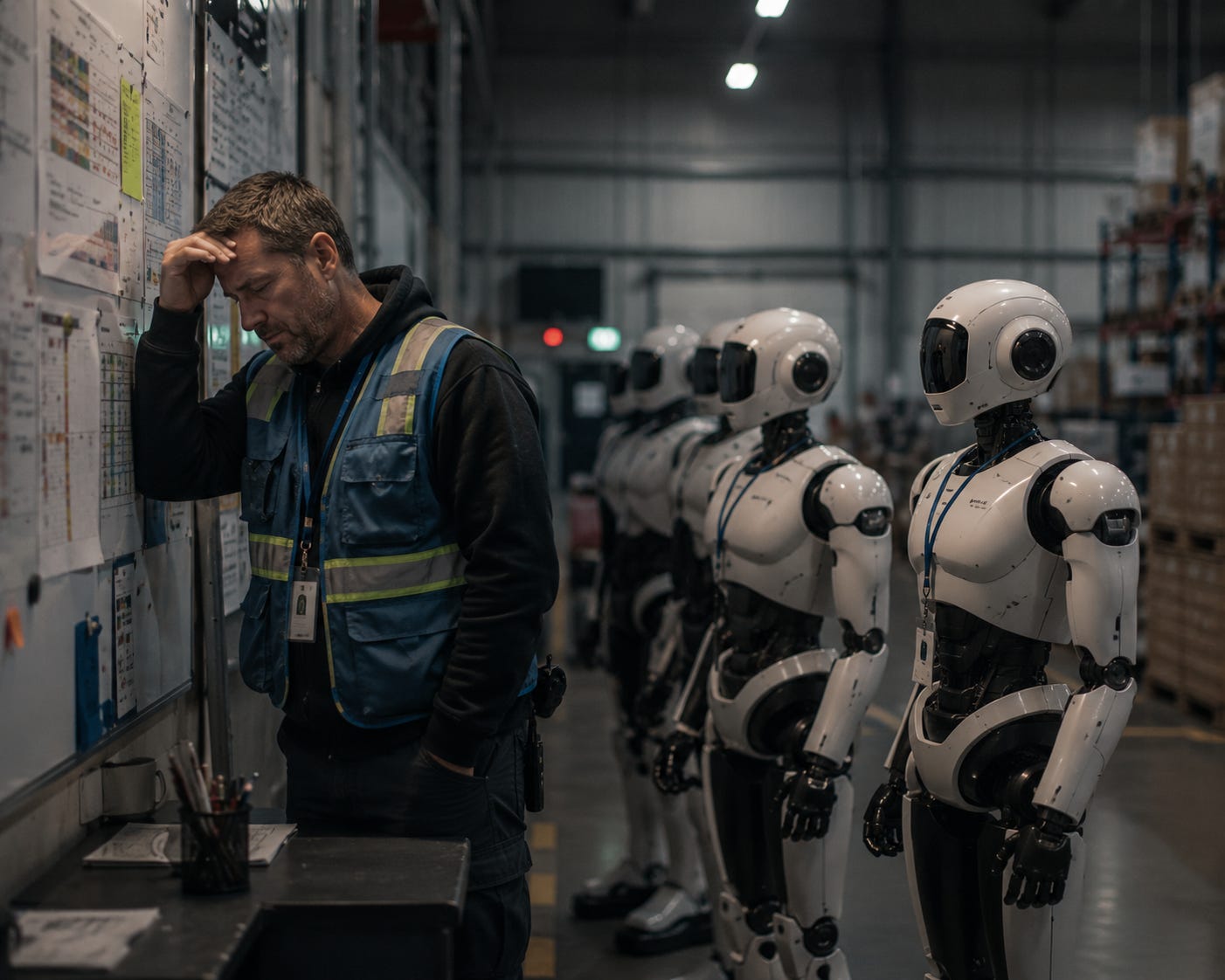
The demo is becoming the easy part. The hard part is the Monday morning operating system around the demo.
Menu of the day
Markets: calm tape, nervous machinery
The article: robots leave the stage and enter the warehouse
Shot: agents get orchestration, defense gets throughput, founders get supervision bills
Doggy Bag: machines, managers, and the illusion of free autonomy
What to watch: deployment density, not announcement density
MARKETS: The broad market has been acting less like a panic room and more like a waiting room. AI infrastructure, defense autonomy, and industrial automation remain the noisy parts of the room, but the investor question is changing. It is less “can this thing work?” and more “can this thing be deployed without turning the customer into unpaid operations staff?”

NAMES: The interesting names are not only the chip companies anymore. Figure is trying to turn humanoids into warehouse labor. Anthropic is pushing Claude Code toward multi-agent orchestration. Defense buyers keep talking about autonomous systems at scale. The pattern is simple: the frontier is moving from model capability to managed work.
The article
AI - ROBOTICS - The robot finally got a job. Now it needs a boss.
Figure signed an agreement with Catalyst Brands to start humanoid robot operations at Catalyst’s Reno, Nevada distribution logistics center. The stated target is not a science-fiction moonshot. It is physically demanding supply-chain work: the kind of repetitive, awkward, expensive labor that makes every automation deck sound suddenly less ridiculous.
This matters because humanoid robots are leaving the showroom sentence. They are being pointed at the most honest test in enterprise technology: the warehouse floor. There, nobody cares whether the pitch video looked smooth. The customer cares whether the system can work around inventory, exceptions, staffing gaps, safety rules, uptime, training, broken bins, weird pallets, and the thousand tiny indignities of physical operations.
The old robotics story was capability. Can the machine walk, lift, recognize, sort, recover? The new robotics story is management. Who schedules it? Who supervises it? Who fixes the edge cases? Who owns the productivity number? Who decides whether one robot is a pilot, ten robots are a process, and one hundred robots are a new labor model?
This is where the founder lesson hides. Most automation startups sell the replacement moment too early. They promise the customer a cheaper worker. But the customer is not only buying a worker. They are buying a new operating layer. If that layer is fragile, the buyer does not save labor. They inherit a small machine department with a SaaS login and a support queue.
The better wedge is not “replace humans.” It is “make one messy workflow measurable enough that humans can manage machines without losing their weekend.” Not as sexy. Much more likely to survive procurement.
Figure’s Catalyst deal is interesting because it points toward that next phase. Humanoids become commercially serious when they stop being treated like devices and start being treated like a managed capacity product. The unit is not the robot. The unit is a shift, a task class, a throughput promise, a downtime rule, and a human escalation path.
In other words: the robot wants a shift manager. And the startup wants to prove that manager does not need a PhD, three integration partners, and a sacrificial operations team.
Shot
Claude gets a conductor
Anthropic’s Opus 4.8 release is not only a better-model story. The more useful signal is Dynamic Workflows in Claude Code, where the system can fan a large task out across many subagents and verify the work before handing the result back. That is the same shift in software form: less chatbot, more work coordinator.
Defense wants factories, not demos
The Pentagon’s Replicator idea was framed around fielding attritable autonomous systems at scale across domains. The phrase to watch is not “autonomous.” It is “at scale.” Defense procurement is a brutal reminder that autonomy has to become repeatable production, maintenance, training, logistics, and doctrine before it becomes power.
Agents are getting priced like work
The more AI systems coordinate tools, subagents, code, memory, and verification, the less useful it is to price them like chat. Founders should expect buyers to ask a very normal question: what work did this actually complete, who checked it, and how much human cleanup did it create?
Startup Lesson
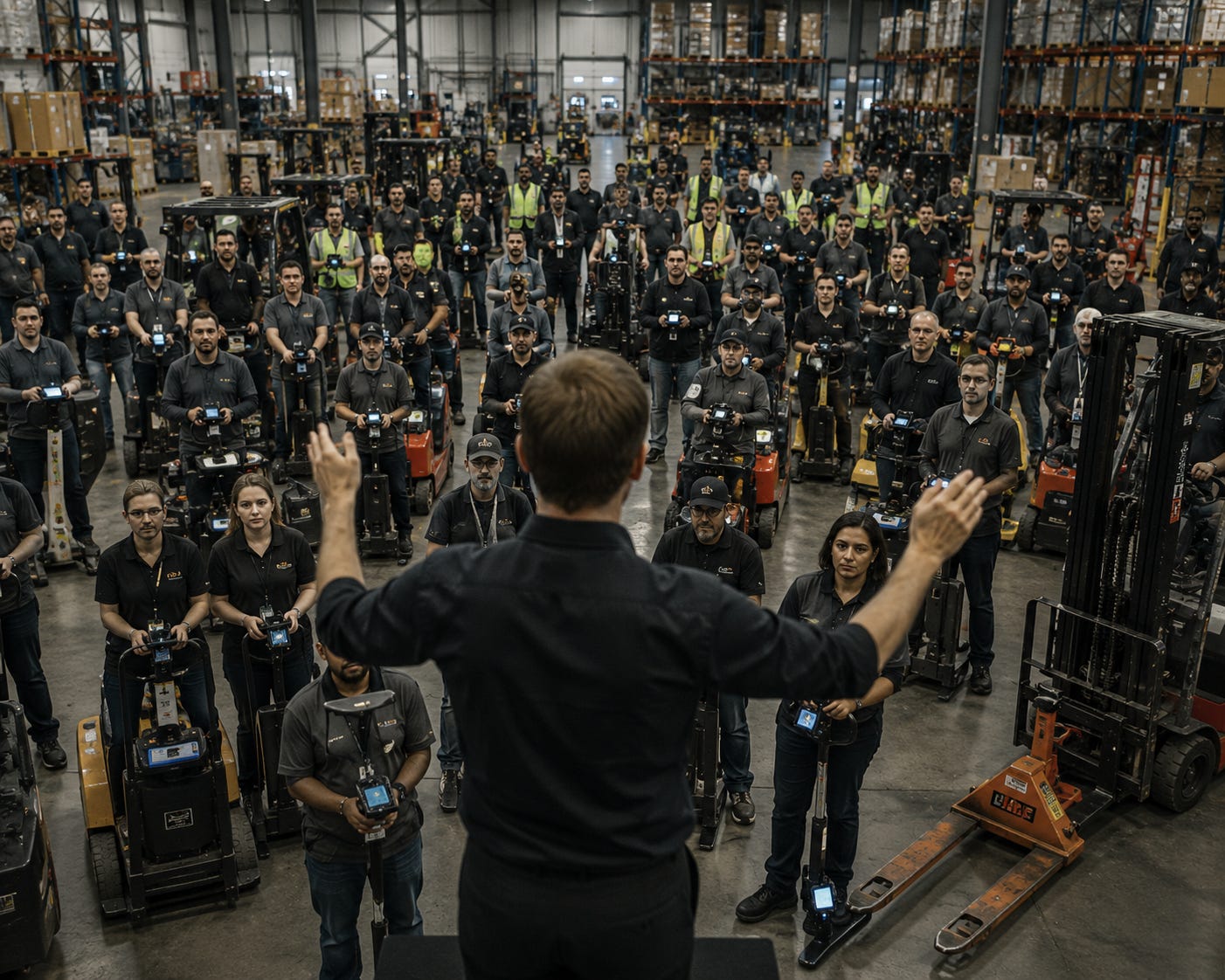
If your startup sells autonomy, sell the supervision model with it.
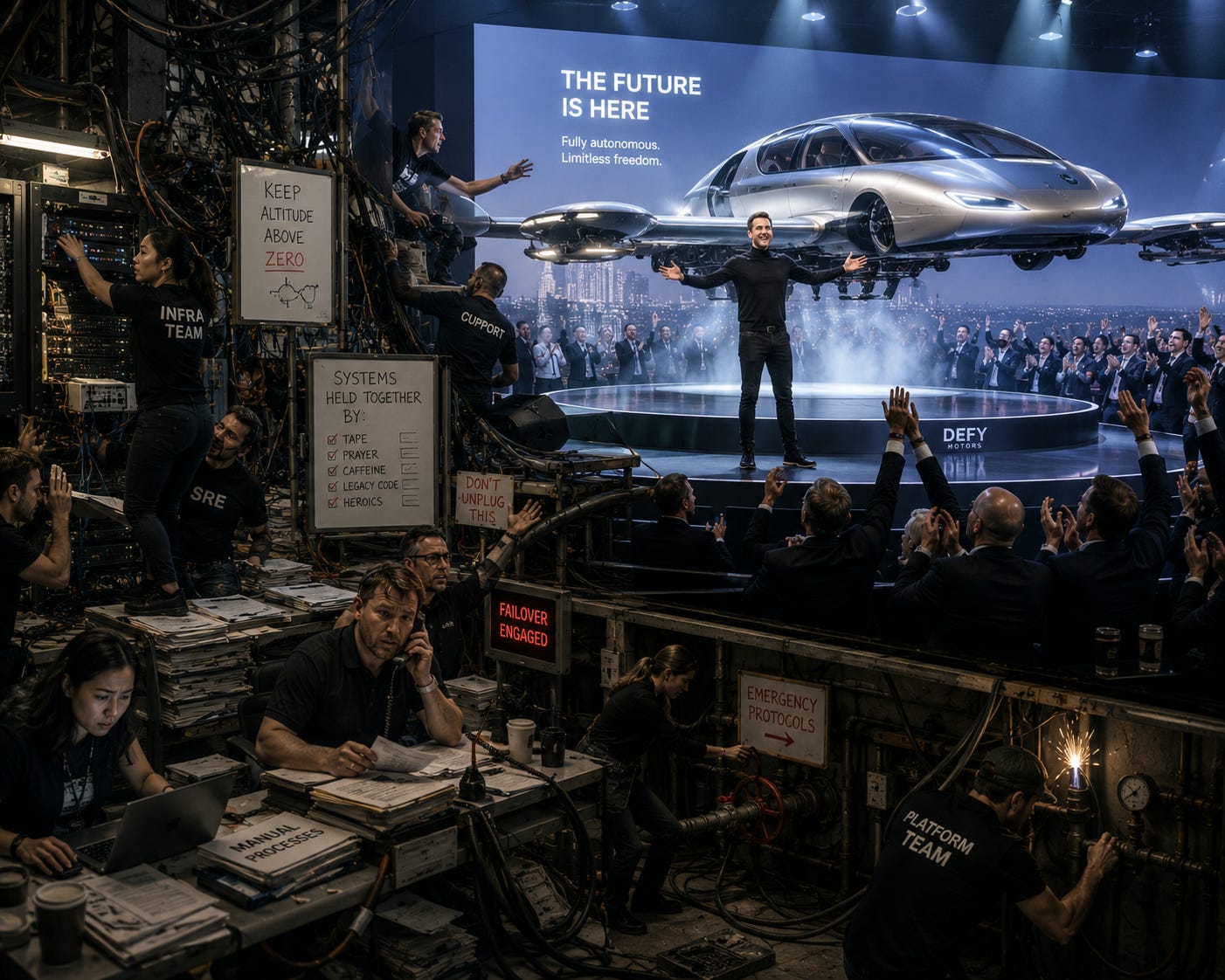
Founders love to say the product is autonomous because it sounds magical. Buyers hear “new liability with fewer fingerprints.” The practical pitch is different: here is what the system does alone, here is what it escalates, here is how humans review it, here is what happens when it fails, and here is how the economics still work after supervision.
The winner is rarely the startup with the prettiest autonomous demo. It is the one that makes autonomy boring enough to buy.
Doggy Bag
Fun fact: The humanoid robot market keeps borrowing language from labor, software, and hardware at the same time. Very efficient. Also a lovely way to confuse every pricing meeting.
The number: Multiple thousands. That was the scale language attached to the original Replicator ambition, and it remains the right mental model for serious autonomy: one unit is a demo, fleets are the business.
The quote: “Can it do the task?” is becoming less useful than “Can the organization absorb the task being done this way?”
Reco: If you are building an agent or robotics product, write the escalation policy before the next feature list. It will tell you where the product is still pretending.
And besides that
AI coding tools are moving toward orchestration instead of single-response assistance.
Warehouse automation is becoming a better venture test than another polished robotics demo.
Defense autonomy keeps pulling startups toward production discipline earlier than traditional software markets do.
Enterprise buyers are starting to ask whether AI reduces work or quietly moves work into review, cleanup, and governance.
What to watch
Deployment density: Watch how quickly robotics pilots become repeat deployments inside the same customer footprint.
Supervisor ratios: The real metric is not robots per site. It is robots per human operator, support person, and exception path.
Agent cost accounting: Dynamic workflows make AI work more powerful, but also easier to over-spend on. The next useful dashboard is not chat history. It is work completed per supervised dollar.