

Your daily undigestible breakdown of cool tech stuff and catastrophic venture endeavors
Menu of the day
Markets: AI still carries the weather
The article: capital fit becomes the new founder homework
Shot: cyber bills, community rooms, and accelerator spreadsheets
Startup Lesson: raise for the route, not the romance
Doggy Bag: smart lenses, PE certificates, and AI assistant SEO
What to watch: budget, proof, and who actually gets in the room
Market pulse
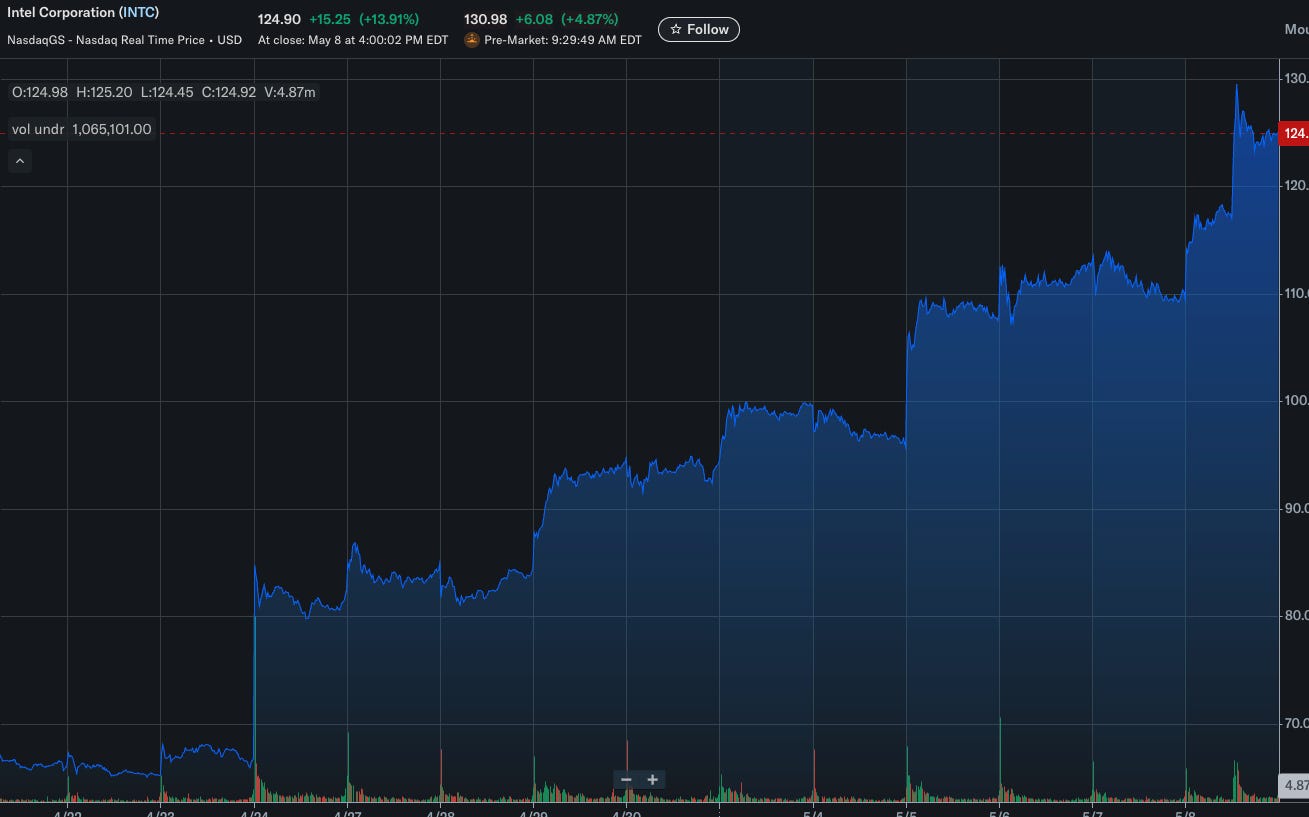
The market is still behaving like a person who knows the kitchen is on fire but also just found a very good dessert. The AI trade remains the sweet part. Tech and semiconductor names are still doing a lot of the work, while oil, geopolitics, and rates keep standing nearby with a clipboard.
The useful read is not that investors have stopped caring about risk. They have become more selective about which risk deserves forgiveness. AI infrastructure, security, and companies with visible enterprise demand still get the benefit of the doubt. Vague software, weaker consumer stories, and anything that needs a perfect funding market do not get the same treatment.
For founders, that matters. Public markets are not sending a simple “risk-on” postcard. They are saying: show me the budget, show me the buyer, show me the proof that travels. Slightly rude. Also probably healthy.
The article: Capital has homework
There is a quiet shift happening in the fundraising conversation. Founders used to ask a fairly simple question: can we raise? The better question now is more annoying: should this company raise this kind of capital, from this kind of investor, at this exact stage, with this exact evidence?
That sounds like consultant furniture until you watch what is happening around the ecosystem. Investor lists are getting more specialized. LP targeting is becoming its own mini-industry. Accelerator databases are being rebuilt because the obvious five names no longer answer the real question. Founder communities are getting smaller, more curated, and less interested in panels that feel like homework wearing a lanyard.
The setup is simple. Capital is not one thing. Venture, debt, strategic capital, family office money, grants, accelerators, studios, customers, and revenue all behave differently. They come with different expectations, timelines, control issues, and failure modes. Treating them as interchangeable because they all look like money is how founders end up spending three months chasing people who were never structurally able to say yes.
In practice, the market is forcing more precision. A pre-seed AI infrastructure company, a profitable B2B service business, a regulated healthtech product, and a consumer app with suspicious retention should not be telling the same fundraising story. They should not even be knocking on the same doors. One needs technical credibility and a believable path to infrastructure scale. One may need working capital or strategic partnerships. One needs regulatory proof and reimbursement logic. One may need therapy, which is not yet an asset class.
This is where a lot of fundraising advice becomes dangerous. “Build relationships early” is true. “Talk to investors” is true. “Raise before you need the money” is often true. But the missing step is fit. If the investor’s mandate, cheque size, geography, stage, risk appetite, and follow-on logic do not match the company, the founder is not building momentum. They are doing unpaid market research with better Zoom lighting.
The same thing is happening one level above startups, with funds trying to understand which LPs actually back which strategies. AI funds, emerging managers, specialist funds, diverse managers, impact funds, and co-investment vehicles are all competing for capital that has its own rules. If fund managers now need better LP fit, founders definitely need better investor fit. The entire capital stack is admitting that generic outreach is expensive theatre.
There is a good reason for this. Investors are not just buying a story anymore. They are buying a path. Can this company reach the next proof point with the capital requested? Is the use of funds specific enough to survive contact with reality? Does speed matter in this market? Does the first customer prove something the tenth customer will care about? Is the next round fundable without requiring everyone to pretend the last round was a spiritual experience?
This does not mean fundraising is bad. It means fundraising is a trade. You exchange ownership, control, time, reporting, and pressure for speed, scale, and optionality. Sometimes that trade is exactly right. Sometimes it is a very expensive way to learn that the business mostly needed clearer positioning, better distribution, or six more months of customer proof.
The founder trap is confusing validation with acceleration. A round can validate a company socially, but capital only helps when there is something real to accelerate. If the product is not pulling demand, more money buys more attempts to explain why it should. If the sales motion is unclear, more money turns the confusion into a hiring plan. If the market is narrow, more money can make the mistake arrive faster and with nicer dashboards.
Zoom out and the better fundraising question becomes almost boring: what will this money make true that is not true today? If the answer is specific, measurable, and tied to a real buyer path, raise. If the answer is “credibility,” pause. Credibility is useful, but it is a bad thing to rent with dilution.
This is also why founder communities and curated rooms matter more than they look. The best rooms are not big because the point is not attendance. It is signal density. Ten serious people around a table can beat a 400-person event if the room creates better information: who is buying, who is raising, who is hiring, who is quietly struggling with the same problem, who knows the right investor, and who is just collecting badges for LinkedIn archaeology.
Bottom line: capital has homework now. Not just “can you raise?” but “which capital fits the job?” The founders who answer that early will waste less time, keep more leverage, and avoid building a company for the fundraising cycle instead of the customer. Not bad, for a lesson that mostly sounds like admin.
Shot: Cybersecurity is the rare AI bill that gets bigger
Most AI stories are sold as productivity stories. Fewer people, faster work, lower marginal cost, software eating the junior analyst, etc. Cybersecurity is the awkward exception. AI makes attackers cheaper, faster, and more convincing, which means defenders do not get to spend less. They get to explain to the board why the invoice has become more philosophical.
The important point is not that every cyber stock should go up. Public multiples can compress even when fundamentals are fine. The deeper signal is budget structure. If AI agents touch internal systems, supplier workflows, contracts, finance, or customer data, security is no longer a back-office concern. It becomes part of the product evaluation. Founders building AI tools for enterprises should expect procurement to ask about permissions, identity, audit trails, and what happens when the agent finishes the task. The fun part of agentic AI is autonomy. The budget part is liability.
Shot: The room is the product
Founder communities keep rediscovering a very old truth: the format matters less than the guest list. The best small rooms are not trying to scale into conferences. They are trying to create enough trust for useful information to move.
That sounds soft until you remember that early-stage markets run on private signals. Who is hiring well. Which fund is actually moving. Which customer is pretending to be interested. Which operator has solved the exact ugly problem you are about to meet next Tuesday. A founder dinner with 12 relevant people can be more valuable than a keynote about “ecosystem building,” which is often just catering with a mission statement.
Shot: Accelerator lists are becoming market maps
The accelerator world is also getting cleaned up. Founders know the famous names. The real problem is finding the less obvious programs that actually match their stage, geography, sector, equity tolerance, and support needs.
This is more interesting than it looks. It means the startup support stack is becoming more searchable, more structured, and more transactional. The founder is not asking “what is prestigious?” as much as “what gets me closer to proof?” That is a healthier question. Prestige is nice. Fit is cheaper.
Startup Lesson: Raise for the route
Before a founder raises, the useful exercise is not only polishing the deck. It is mapping the route.
What proof does the next investor need? Which customer proof travels? Which market should come first because it proves something the second market respects? What capital type matches the business model? What investor is structurally able to say yes? If the answers are vague, the deck is probably not the problem. The route is.
This is especially true for companies in regulated or technical markets. A healthcare pilot, a cyber proof-of-concept, or an enterprise AI deployment can look impressive and still fail to unlock the next buyer if it does not answer the right adoption question. The market does not reward effort. It rewards proof that compounds.
Doggy Bag
Smart contact lenses are back in the room. VivaTech is putting a UAE startup working on smart contact lens prototypes on the radar, with use cases that sound like smart glasses decided to become more intimate. Interesting category. Also a useful reminder that “wearable” can still mean “please put computing near my eyeball,” which is one of those sentences that makes the future feel both impressive and slightly unwell.
Private equity education has become a product category. A Wharton Online and Wall Street Prep program is being marketed to the deal-flow crowd, which makes sense. The market keeps professionalizing access to finance knowledge. Somewhere, an Excel model just stood up straighter.
AI assistant discovery is becoming a growth channel. A cold inbound pitch claimed Ugly Baby should list itself where AI assistants can find and recommend products. Ignore the pitch quality for a second. The underlying idea matters. SEO used to mean ranking for humans typing into Google. The next layer is being legible to agents that answer on behalf of humans. Horrible phrase. Real problem.
VC jobs are still a useful thermometer. Roles across Antler, a16z, Future Back Ventures, January Capital, CVCs, platform teams, and venture engagement functions suggest the venture machine is still hiring around capital formation, platform, and specialization. The industry may complain about liquidity, but it is still staffing the pipes.
What to watch
Watch cyber budgets around AI agents. The first big agentic breach will probably turn “governance” from a slide into a purchase order.
Watch founder capital routes. The best early-stage advice this year may be less “raise faster” and more “raise from the right capital type.”
Watch European and frontier-market accelerator programs. The useful ones will sell fit, access, and proof, not just badge value.
Watch whether small founder rooms become a stronger distribution channel than big startup events. The room is not always the strategy. Sometimes it is the whole product.